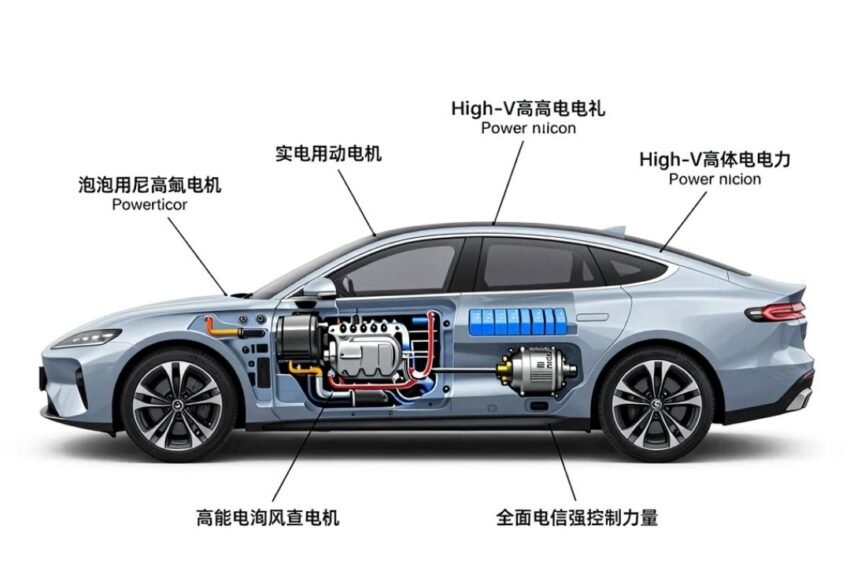
Introduction
Hybrid cars have changed the way modern vehicles use energy. By combining a gasoline engine with an electric motor and battery system, hybrid vehicles can deliver improved fuel efficiency while maintaining the convenience of conventional gasoline-powered transportation.
Unlike fully electric cars, most traditional hybrid vehicles do not need to be plugged into an external charger. Instead, they can recharge their batteries through regenerative braking and energy produced by the vehicle’s powertrain.
In 2026, hybrid technology is available in compact cars, sedans, SUVs, pickup trucks, and luxury vehicles. Understanding how hybrid cars work can help drivers decide whether this technology is right for their needs.
This complete guide explains hybrid engines, electric motors, batteries, regenerative braking, different hybrid systems, fuel economy, maintenance, advantages, disadvantages, and the future of hybrid technology.
What Is a Hybrid Car?
A hybrid car uses at least two different sources of propulsion, typically:
- A gasoline engine
- An electric motor
The system also includes a battery pack that stores electrical energy.
A computer-controlled power-management system determines when to use the gasoline engine, electric motor, or both.
The goal is to use energy more efficiently than a comparable conventional gasoline vehicle.
Main Components of a Hybrid Car
Understanding the main components makes hybrid technology easier to understand.
1. Gasoline Engine
The gasoline engine works similarly to the engine found in a conventional car.
It burns fuel to produce mechanical energy.
However, the hybrid system can reduce how often and how hard the engine needs to operate.
2. Electric Motor
The electric motor can provide additional power to the wheels.
Depending on the hybrid design, the motor can:
- Propel the vehicle
- Assist the gasoline engine
- Recover energy during braking
Electric motors can provide immediate torque, which contributes to smooth acceleration.
3. Hybrid Battery
The battery stores electrical energy.
It is usually much smaller than the battery found in a fully electric vehicle.
The battery supplies power to the electric motor and receives energy from regenerative braking or the engine-driven charging system.
4. Power Electronics
Power electronics manage the flow of electricity between the battery, electric motor, and other components.
They help convert and control electrical energy as required by the vehicle.
5. Transmission
Hybrid vehicles can use different transmission designs.
Some systems use specialized continuously variable transmissions, while others use different mechanical arrangements to combine engine and electric power.
The exact design varies between manufacturers.
6. Regenerative Braking System
Regenerative braking allows the vehicle to recover some energy during deceleration.
Instead of allowing all kinetic energy to become heat through conventional friction brakes, the electric motor can operate as a generator under suitable conditions.
How a Hybrid Car Starts
When you start a hybrid vehicle, the electrical system becomes active.
In many hybrids, the gasoline engine does not need to start immediately.
The vehicle’s control system determines which power source is most efficient for the current conditions.
At low speeds or light loads, electric power may be used.
When more power is needed, the gasoline engine can start automatically.
The driver generally does not need to manually control this process.
How Hybrid Cars Accelerate
Acceleration requires additional energy.
The hybrid system can combine gasoline and electric power.
For example, the electric motor can provide additional torque while the gasoline engine supplies continuous power.
This allows the vehicle to accelerate smoothly while using the available energy efficiently.
Some performance-oriented hybrids use electric motors not just for efficiency but also to increase acceleration and overall power.
How Hybrid Cars Brake
Braking is one of the most important parts of hybrid operation.
In a conventional vehicle, braking converts much of the car’s kinetic energy into heat.
In a hybrid, the electric motor can operate in reverse as a generator.
As the vehicle slows down, the generator produces electricity.
That electricity is sent to the battery.
This is called regenerative braking.
Why Regenerative Braking Matters
Regenerative braking can:
- Recover energy
- Improve efficiency
- Recharge the battery
- Reduce fuel consumption
- Reduce reliance on friction brakes in suitable conditions
The recovered energy can later help power the vehicle.
How a Hybrid Battery Charges
A traditional hybrid generally charges its battery in two primary ways.
Regenerative Braking
Energy is recovered when the vehicle slows down.
Engine-Generated Electricity
The gasoline engine can also power a generator or otherwise contribute to charging the battery depending on the hybrid system design.
This means traditional hybrids do not normally require an external charging cable.
Do Hybrid Cars Need to Be Plugged In?
Traditional hybrid cars generally do not need to be plugged into an electrical outlet.
This is one of their major differences from plug-in hybrids and fully electric vehicles.
The vehicle automatically manages battery charging.
However, plug-in hybrid electric vehicles, or PHEVs, have larger batteries and are designed to be charged externally.
How Plug-In Hybrid Cars Work
A plug-in hybrid combines characteristics of a conventional hybrid and an EV.
It has:
- Gasoline engine
- Electric motor
- Larger battery
- External charging capability
When the battery is charged, the vehicle can operate using electric power for certain trips.
After the available electric energy is depleted, the gasoline engine can provide additional range.
This makes PHEVs useful for drivers who want electric driving for daily trips but gasoline flexibility for longer journeys.
Types of Hybrid Systems
There is no single hybrid design.
Full Hybrid
A full hybrid can operate using the gasoline engine, electric motor, or both.
It can often provide some electric-only driving under appropriate conditions.
Mild Hybrid
A mild hybrid uses a smaller electrical system to assist the gasoline engine.
It can support:
- Engine starting
- Stop-start systems
- Acceleration assistance
- Electrical loads
A mild hybrid generally cannot provide significant electric-only driving.
Plug-In Hybrid
A plug-in hybrid has a larger battery and can be externally charged.
It can provide greater electric-driving capability than a traditional hybrid.
Series Hybrid
In a series hybrid arrangement, the electric motor provides the primary mechanical propulsion while the gasoline engine can generate electricity.
Parallel Hybrid
In a parallel system, the gasoline engine and electric motor can both provide mechanical power to the wheels.
Some vehicles combine elements of different architectures.
How Hybrid Cars Save Fuel
Hybrid vehicles can improve fuel economy in several ways.
Electric Assistance
The electric motor can reduce the amount of work performed by the gasoline engine.
Regenerative Braking
Energy that would normally be lost during braking can be recovered.
Engine Shutoff
The gasoline engine can automatically switch off when it is not needed.
Efficient Engine Operation
Hybrid systems can allow the gasoline engine to operate in more efficient conditions.
Reduced Idling
The engine can remain off while the vehicle is stopped in certain situations.
Why Hybrids Are Efficient in City Driving
Hybrid technology can be particularly effective in urban environments.
City driving involves frequent:
- Stops
- Starts
- Braking
- Acceleration
These conditions provide opportunities for regenerative braking and electric assistance.
A hybrid can recover energy while slowing down and use that energy during subsequent acceleration.
Hybrid Cars on Highways
Hybrid vehicles can also be efficient on highways.
However, the efficiency advantage may vary depending on vehicle design and driving conditions.
At steady highway speeds, there may be fewer opportunities for regenerative braking.
Factors such as vehicle aerodynamics, weight, engine efficiency, and driving speed become increasingly important.
Hybrid Battery Technology
The battery is one of the most important components of a hybrid system.
Hybrid batteries are designed to repeatedly charge and discharge as the vehicle operates.
Battery technology continues to improve through advances in:
- Energy density
- Thermal management
- Battery chemistry
- Software
- Durability
- Manufacturing
Different manufacturers use different battery technologies.
How Hybrid Battery Management Works
A battery-management system monitors battery conditions.
It can help control:
- Temperature
- Charge level
- Current
- Voltage
- Charging rate
- Discharging rate
This helps maintain battery performance and protect the battery from unsuitable operating conditions.
Are Hybrid Batteries Safe?
Modern hybrid vehicles use multiple systems to manage high-voltage batteries.
These can include:
- Protective battery enclosures
- Electrical isolation
- Cooling systems
- Battery-management software
- High-voltage safety systems
High-voltage hybrid components should only be serviced by appropriately trained technicians.
Drivers should follow manufacturer safety instructions, particularly after severe collisions or flooding.
How Long Do Hybrid Batteries Last?
Hybrid batteries are designed for long-term use.
Their lifespan varies depending on:
- Vehicle model
- Battery chemistry
- Climate
- Driving conditions
- Age
- Usage
A battery may eventually lose capacity or require replacement, but this does not mean hybrid batteries routinely fail after only a few years.
When buying a used hybrid, review the battery warranty and maintenance history.
Hybrid Engine Maintenance
Hybrid cars still have gasoline engines, so traditional engine maintenance remains important.
Depending on the model, this may include:
- Oil changes
- Oil-filter replacement
- Air-filter service
- Spark plugs
- Cooling-system maintenance
- Belt inspections
Always follow the manufacturer’s maintenance schedule.
Hybrid Brake Maintenance
Regenerative braking can reduce the amount of work performed by conventional friction brakes.
As a result, some hybrid drivers may experience slower brake-pad wear.
However, friction brakes remain important, and brake components still need regular inspection.
Brake systems should never be neglected simply because a vehicle uses regenerative braking.
Hybrid Transmission Technology
Hybrid transmissions vary significantly.
Some manufacturers use specialized transmission designs that combine engine and electric-motor power efficiently.
Other systems use different mechanical layouts.
The exact transmission technology affects:
- Acceleration
- Efficiency
- Driving feel
- Engine operation
- Maintenance
When comparing hybrids, it is useful to research the specific powertrain rather than assuming every hybrid works the same way.
How Hybrid Cars Handle Traffic
Hybrids can be particularly convenient in heavy traffic.
When stopped, the gasoline engine may automatically shut down.
During low-speed movement, the electric motor can sometimes provide propulsion.
Regenerative braking can recover energy during repeated slowing.
These features can help reduce unnecessary fuel consumption.
Hybrid Cars and Air Conditioning
Air conditioning can affect fuel economy.
In some hybrid systems, electrical components can operate the climate-control system even when the gasoline engine is off.
However, energy use still depends on temperature, vehicle design, and climate-control settings.
Extreme heat can therefore influence hybrid efficiency.
Hybrid Cars in Cold Weather
Cold temperatures can affect hybrid performance and fuel economy.
The vehicle may need additional energy for:
- Cabin heating
- Battery temperature management
- Engine warm-up
Efficiency can therefore be lower in cold conditions.
The effect varies by vehicle and climate.
Hybrid Cars vs Gasoline Cars
Hybrid vehicles generally offer better fuel efficiency than comparable conventional gasoline vehicles, although the difference depends on the models being compared.
| Feature | Hybrid | Gasoline |
|---|---|---|
| Gasoline engine | Yes | Yes |
| Electric motor | Yes | Usually no |
| Battery | Yes | Small conventional battery |
| Regenerative braking | Yes | Usually no |
| External charging | Usually no | No |
| Fuel economy | Often higher | Varies |
| Tailpipe emissions | Yes | Yes |
Hybrid vehicles may cost more initially, but fuel savings can help offset the difference over time.
Hybrid Cars vs Electric Cars
The biggest difference is that EVs do not use gasoline.
| Feature | Hybrid | EV |
|---|---|---|
| Gasoline engine | Yes | No |
| Electric motor | Yes | Yes |
| Gasoline | Required | Not required |
| External charging | Usually no | Yes |
| Tailpipe emissions | Yes | None |
| Engine maintenance | Yes | No |
| Battery size | Smaller | Larger |
A hybrid offers flexibility, while an EV provides fully electric operation.
Advantages of Hybrid Technology
Hybrid cars can offer several benefits.
Improved Fuel Economy
Electric assistance can reduce gasoline consumption.
Long-Distance Flexibility
Drivers can refuel at conventional gasoline stations.
No Regular Charging
Traditional hybrids do not normally require external charging.
Smooth Performance
Electric motors can provide immediate torque.
Reduced Emissions
Using less gasoline can reduce tailpipe emissions compared with some comparable gasoline vehicles.
Strong City Efficiency
Stop-and-go driving can provide opportunities for energy recovery.
Disadvantages of Hybrid Technology
Hybrids also have limitations.
Higher Initial Cost
Hybrid systems can increase the purchase price.
Greater System Complexity
The vehicle combines gasoline and electric components.
Battery Replacement
Eventually, the hybrid battery may require replacement.
Continued Gasoline Dependence
Traditional hybrids still burn gasoline.
Specialized Repairs
Some hybrid components require trained technicians and specialized equipment.
Future of Hybrid Technology
Hybrid technology continues to evolve.
Future developments may include:
- More efficient electric motors
- Improved batteries
- Smarter energy management
- More hybrid SUVs
- More hybrid pickup trucks
- Improved plug-in hybrids
- AI-assisted power management
Automakers are increasingly combining hybrid systems with sophisticated software.
AI and Hybrid Vehicles
Artificial intelligence and advanced software could help hybrid vehicles optimize energy use.
A future system could analyze:
- Traffic
- Terrain
- Driving style
- Navigation
- Battery condition
- Weather
It could then optimize the use of gasoline and electric power.
Hybrid SUVs
Hybrid SUVs are becoming increasingly important because consumers want fuel efficiency without giving up passenger and cargo space.
Manufacturers are developing hybrid versions across multiple SUV categories.
Hybrid Pickup Trucks
Hybrid pickups can combine electric assistance with gasoline-powered capability.
Depending on the design, hybrid systems can improve efficiency while supporting towing, acceleration, and electrical functions.
Are Hybrid Cars Worth Buying in 2026?
Hybrid cars can be a strong choice for drivers who want improved fuel economy without depending on external charging.
They may be particularly suitable if you:
- Drive frequently in cities
- Take long road trips
- Lack home charging
- Want lower gasoline consumption
- Prefer quick refueling
- Want a transition toward electrification
An EV may be better for drivers who have convenient charging and want fully electric transportation.
Tips for Getting Better Hybrid Fuel Economy
Drivers can maximize efficiency by following several simple practices.
Drive Smoothly
Avoid unnecessary hard acceleration and braking.
Maintain Tire Pressure
Properly inflated tires can help improve efficiency.
Follow Maintenance Schedules
Regular service keeps the vehicle operating properly.
Use Regenerative Braking
Allowing the vehicle to decelerate smoothly can provide opportunities for energy recovery.
Reduce Unnecessary Weight
Carrying excessive weight can reduce efficiency.
Avoid Excessive Speed
Higher speeds generally increase energy consumption.
Frequently Asked Questions
How does a hybrid car work?
A hybrid combines a gasoline engine with an electric motor and battery. The vehicle automatically manages these systems to provide power efficiently.
Does a hybrid car charge itself?
Traditional hybrids can recharge their batteries through regenerative braking and energy generated by the vehicle’s powertrain.
Can a hybrid run only on electricity?
Some full hybrids can operate using electric power alone for limited periods and under suitable conditions. Mild hybrids generally cannot provide meaningful electric-only propulsion.
What is regenerative braking?
Regenerative braking converts some of the vehicle’s kinetic energy into electrical energy during deceleration and stores that energy in the battery.
Do hybrid cars use gasoline?
Yes. Traditional hybrids use gasoline, while plug-in hybrids can use electricity for certain trips but still have a gasoline engine.
Do hybrid cars need special maintenance?
Hybrid vehicles require normal maintenance plus inspections of their hybrid-specific components. Maintenance requirements vary by model.
Are hybrid batteries expensive?
Hybrid batteries can be expensive to replace, but they are designed for long-term use. Warranty coverage and replacement costs vary by manufacturer and vehicle.
Are hybrid cars good for city driving?
Yes. Hybrid systems can be particularly efficient in stop-and-go driving because regenerative braking and electric assistance can recover and reuse energy.
Conclusion
Understanding how hybrid cars work makes it easier to appreciate why this technology remains important in 2026. A hybrid combines a gasoline engine, electric motor, battery, power electronics, and regenerative braking system to use energy more efficiently.
The gasoline engine provides conventional power, while the electric motor can assist acceleration or provide propulsion under suitable conditions. During braking, the electric motor can act as a generator and recover some of the vehicle’s kinetic energy.
Traditional hybrids generally do not need external charging, which is one of their biggest advantages. Drivers can continue using gasoline stations while benefiting from electric assistance and improved fuel economy.
Plug-in hybrids take the concept further by using larger batteries that can be charged externally. They can provide electric driving for certain trips while retaining a gasoline engine for longer journeys.
Hybrid technology also continues to evolve. Better batteries, smarter software, advanced energy management, hybrid SUVs, hybrid pickups, and AI-assisted systems could make future hybrids even more efficient and capable.
For consumers, the most important decision is choosing a powertrain that matches their lifestyle. Drivers who want better fuel economy, long-distance flexibility, and no regular charging requirement may find a hybrid especially practical.
As the automotive industry continues toward electrification, hybrid vehicles will likely remain an important part of the transition. They provide a practical combination of gasoline-powered range and electric efficiency while giving consumers another choice in an increasingly diverse automotive market.