Introduction
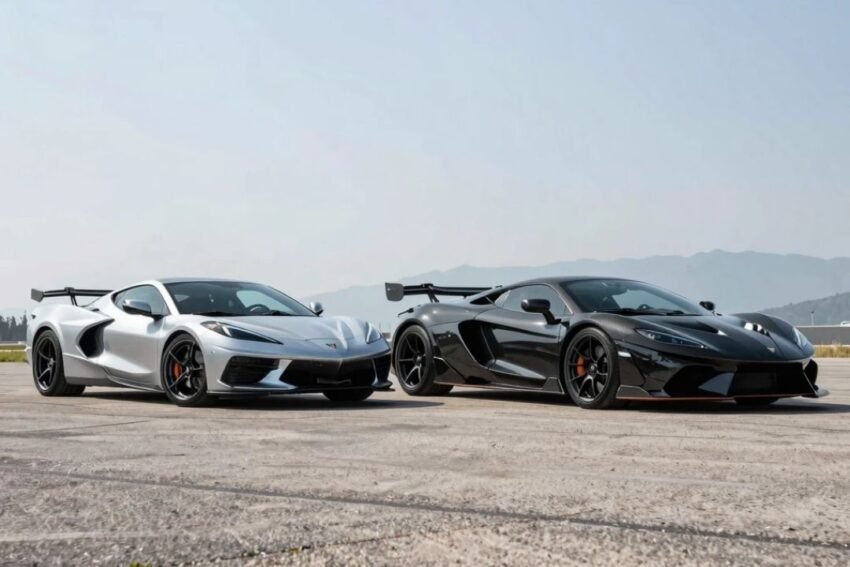
Sports cars vs supercars in 2026 is an interesting comparison because modern automotive technology has blurred the line between the two categories. Both can offer impressive acceleration, advanced handling, powerful engines, and dramatic styling, but they are generally designed for different levels of performance, exclusivity, technology, and price.
Traditional sports cars focus heavily on driving enjoyment, handling, performance, and sometimes everyday usability. Supercars typically push performance much further, using extreme power, lightweight materials, advanced aerodynamics, sophisticated suspension systems, and cutting-edge technology.
The rise of hybrid and electric powertrains has made the comparison even more interesting. Electric motors can provide instant torque, while hybrid systems can combine electric assistance with powerful combustion engines.
In this guide, we explain the key differences between sports cars and supercars in 2026, compare their performance, technology, practicality, costs, and ownership considerations, and highlight important models and trends.
What Is a Sports Car?
A sports car is generally designed to provide an engaging and performance-focused driving experience.
Sports cars often prioritize:
- Handling
- Steering response
- Acceleration
- Driver engagement
- Lightweight construction
- Performance styling
- Rear-wheel drive or performance-oriented all-wheel drive
They can range from relatively affordable models to expensive luxury performance vehicles.
Examples include:
- Mazda MX-5 Miata
- Toyota GR86
- Subaru BRZ
- Toyota GR Supra
- Nissan Z
- Ford Mustang
- Chevrolet Corvette
- Porsche 911
What Is a Supercar?
A supercar is generally positioned at a much higher level of performance, technology, exclusivity, and price.
Supercars often feature:
- Extremely powerful engines or electric motors
- Advanced aerodynamics
- Carbon-fiber construction
- Exceptional acceleration
- High top speeds
- Sophisticated suspension
- High-performance brakes
- Exotic styling
- Premium interiors
Examples include:
- Ferrari 296 GTB
- Lamborghini Revuelto
- McLaren 750S
- Ferrari SF90 Stradale
- Aston Martin Valhalla
The exact definition of a supercar can vary because there is no universal technical standard.
Sports Cars vs Supercars: Main Differences
The biggest differences generally involve performance, price, technology, exclusivity, and practicality.
| Feature | Sports Cars | Supercars |
|---|---|---|
| Performance | High | Extreme |
| Price | Wide range | Generally very high |
| Power | Moderate to very high | Very high to extreme |
| Weight | Often optimized | Often highly engineered |
| Aerodynamics | Performance-focused | Highly advanced |
| Materials | Steel, aluminum, composites | Carbon fiber and advanced composites |
| Practicality | Often reasonable | Usually limited |
| Production | Generally higher | Often lower |
| Technology | Advanced | Cutting-edge |
| Exclusivity | Varies | Usually very high |
Performance Comparison
Performance is one of the biggest differences.
Sports cars can be extremely quick, but supercars generally push acceleration, top speed, braking, and cornering to a more extreme level.
Sports Cars
Sports cars may focus on:
- Balanced handling
- Responsive steering
- Strong acceleration
- Driver engagement
Supercars
Supercars often focus on:
- Extreme acceleration
- Very high top speed
- Maximum cornering performance
- Advanced aerodynamics
- Track capability
However, there are exceptions. Some sports cars can outperform older or less performance-focused supercars.
Acceleration
Acceleration is one area where modern technology has dramatically changed the industry.
Electric motors provide immediate torque, allowing some electric and hybrid vehicles to accelerate extremely quickly.
A sports car may provide excellent acceleration, while a supercar may use multiple electric motors or sophisticated hybrid systems to achieve even more dramatic performance.
Acceleration depends on:
- Power
- Torque
- Weight
- Tires
- Traction
- Transmission
- Launch control
Top Speed
Top speed is another important distinction.
Supercars often prioritize aerodynamic efficiency and high-speed stability.
Sports cars may have lower maximum speeds because manufacturers focus more heavily on handling, comfort, cost, and everyday usability.
Top-speed capability depends on:
- Engine or motor power
- Aerodynamics
- Gear ratios
- Tires
- Cooling
- Vehicle stability
Maximum-speed testing should only be performed in controlled environments.
Handling
Handling determines how a vehicle behaves when cornering and changing direction.
Sports cars can provide excellent handling through:
- Lightweight construction
- Performance suspension
- Rear-wheel drive
- Limited-slip differentials
- Performance tires
Supercars can take these technologies further with:
- Active suspension
- Advanced torque vectoring
- Active aerodynamics
- Carbon-fiber structures
- Sophisticated electronic controls
Braking Performance
Both sports cars and supercars can use powerful braking systems.
Sports cars may feature:
- Large brake rotors
- Multi-piston calipers
- Performance brake pads
Supercars may use advanced carbon-ceramic braking systems.
These can provide strong performance under repeated high-temperature braking, although replacement costs can be substantial.
Aerodynamics
Aerodynamics is especially important for supercars.
Designers use airflow to improve stability and cornering.
Sports-Car Aerodynamics
Sports cars may use:
- Front splitters
- Rear spoilers
- Diffusers
- Air vents
Supercar Aerodynamics
Supercars can add:
- Active aerodynamic elements
- Adjustable wings
- Advanced underbody airflow
- Sophisticated air channels
- High-downforce configurations
The objective is to increase stability without creating excessive aerodynamic drag.
Power-to-Weight Ratio
Power-to-weight ratio measures how much power is available relative to vehicle mass.
A lightweight vehicle can accelerate and change direction more efficiently.
Sports-car manufacturers often reduce weight through:
- Aluminum
- High-strength steel
- Lightweight composites
Supercar manufacturers may go further by using extensive carbon fiber.
Carbon Fiber Construction
Carbon fiber is particularly common in high-performance supercars.
It can be used for:
- Monocoque structures
- Body panels
- Seats
- Wheels
- Aerodynamic components
Its high strength-to-weight ratio can help reduce mass while maintaining structural strength.
Engine Technology
Traditional sports cars can use:
- Naturally aspirated engines
- Turbocharged engines
- Supercharged engines
Supercars frequently use highly engineered turbocharged, naturally aspirated, hybrid, or electric powertrains.
Modern engines can include advanced:
- Fuel injection
- Variable valve timing
- Turbocharging
- Cooling systems
- Engine management
Hybrid Supercars
Hybrid technology has become an important part of modern supercar development.
A hybrid supercar can combine a gasoline engine with electric motors.
Examples include the Ferrari 296 GTB, Ferrari SF90 Stradale, and Lamborghini Revuelto.
Hybrid Advantages
- Instant electric torque
- Strong acceleration
- Advanced traction control
- Additional power
- Improved energy management
Hybrid technology can make a vehicle both faster and more efficient in certain driving conditions.
Electric Supercars
Electric propulsion is changing the definition of extreme performance.
Electric motors can provide:
- Instant torque
- Rapid acceleration
- Precise power control
- Independent motor control
Multiple motors can also enable sophisticated torque vectoring.
The Rimac Nevera is an important example of an electric hyper-performance vehicle.
Sports Cars and Electric Technology
Electric technology is also entering the sports-car segment.
EV sports cars can provide:
- Quick acceleration
- Quiet performance
- Instant torque
- Advanced software
- Sophisticated traction systems
However, battery weight remains an important engineering challenge.
Transmission Differences
Sports cars can offer:
- Manual transmissions
- Automatic transmissions
- Dual-clutch transmissions
Supercars typically prioritize extremely fast automatic or dual-clutch gear changes, although some high-end performance cars have used advanced hybrid or electric transmission systems.
Manual transmissions are increasingly uncommon at the extreme end of the performance market.
Suspension Technology
Sports cars often use performance-tuned suspension systems.
Supercars may use much more advanced systems, including:
- Adaptive dampers
- Active suspension
- Electronically controlled systems
- Performance-specific driving modes
These technologies can help balance road comfort and track performance.
Interior Differences
Sports-car interiors can range from simple and driver-focused to highly luxurious.
Supercar interiors typically use premium materials such as:
- Carbon fiber
- Leather
- Alcantara
- Metal trim
- Advanced digital displays
Supercar cabins are often designed to feel exclusive as well as functional.
Infotainment and Digital Technology
Modern sports cars increasingly offer:
- Digital instrument displays
- Large infotainment screens
- Smartphone connectivity
- Navigation
- Performance data
Supercars may integrate additional performance information and advanced control systems.
AI and Software
Software is becoming increasingly important in both categories.
AI and advanced algorithms can support:
- Driver assistance
- Navigation
- Vehicle personalization
- Traction management
- Energy management
- Performance modes
Supercars can use sophisticated software to coordinate multiple performance systems simultaneously.
Driver Assistance
Modern sports cars can include:
- Automatic emergency braking
- Blind-spot monitoring
- Adaptive cruise control
- Parking assistance
- Rear cameras
Supercars can also offer driver-assistance technologies, although their primary focus remains performance.
Regardless of vehicle type, drivers must remain attentive and responsible.
Practicality
This is one of the biggest differences.
Sports Cars
Many sports cars can be practical enough for:
- Daily commuting
- Weekend trips
- Highway driving
- Occasional passengers
- Moderate cargo
Supercars
Supercars often have:
- Limited storage
- Low ground clearance
- Two seats
- Difficult entry and exit
- Expensive maintenance
Some modern supercars are more usable than others, but practicality is usually not the primary goal.
Sports Cars for Daily Driving
A sports car can be a reasonable daily driver depending on the model.
Examples include:
- Porsche 911
- Ford Mustang
- Chevrolet Corvette
- BMW M4
These vehicles can offer performance while retaining some everyday practicality.
Supercars for Daily Driving
Some supercars can technically be driven every day, but ownership may require more compromises.
Potential challenges include:
- Expensive tires
- High insurance
- Limited cargo space
- Low ride height
- High maintenance costs
- Expensive repairs
Purchase Price
Sports cars cover a wide range of prices.
Some lightweight sports cars are relatively accessible, while premium models can cost substantially more.
Supercars generally begin at much higher price points and can become extremely expensive when equipped with optional features or limited-production specifications.
Ownership Costs
The difference becomes even more significant after purchase.
Sports-car expenses may include:
- Fuel
- Tires
- Insurance
- Maintenance
- Brake components
Supercar expenses can be significantly higher for:
- Tires
- Brakes
- Specialized servicing
- Parts
- Insurance
- Depreciation
Insurance Costs
Insurance costs vary by driver, location, coverage, and vehicle.
Supercars often have higher insurance costs because of their value, performance, repair expenses, and replacement parts.
Always obtain an insurance quote before purchasing.
Maintenance
Sports cars generally require more maintenance than ordinary commuter cars, especially performance models.
Supercars can require specialized service and expensive components.
Buyers should investigate:
- Service intervals
- Warranty coverage
- Dealer availability
- Parts costs
- Long-term maintenance requirements
Resale Value
Resale value varies widely.
Factors include:
- Brand
- Model
- Production numbers
- Condition
- Mileage
- Service history
- Market demand
Some rare supercars may become highly collectible, while others can depreciate significantly.
Sports cars can also hold their value well when they have strong enthusiast demand.
Best Sports Cars in 2026
Some notable sports cars to consider include:
Porsche 911
A strong combination of performance, luxury, and everyday usability.
Chevrolet Corvette
Offers serious performance with a distinctive American design.
Toyota GR Supra
A compact sports coupe focused on performance and handling.
Nissan Z
Combines modern technology with traditional sports-car characteristics.
Mazda MX-5 Miata
A lightweight roadster emphasizing handling and driver engagement.
Toyota GR86
A relatively lightweight rear-wheel-drive sports car.
Best Supercars in 2026
Notable high-performance models and categories include:
Ferrari 296 GTB
A sophisticated hybrid performance car combining a turbocharged engine with electric assistance.
Lamborghini Revuelto
Combines a high-performance V12 engine with hybrid technology.
McLaren 750S
Focuses heavily on lightweight construction and high-performance driving dynamics.
Ferrari SF90 Stradale
Uses a powerful hybrid architecture with advanced electric assistance.
Aston Martin Valhalla
Combines high-performance engineering, hybrid technology, and luxury.
Sports Car vs Supercar: Which Is Faster?
In general, supercars are designed to achieve higher levels of acceleration, top speed, braking performance, and cornering capability.
However, the answer depends on the specific models being compared.
A modern high-performance sports car can be faster than an older or lower-spec supercar.
Therefore, comparing actual performance specifications is more useful than relying solely on the category name.
Sports Car vs Supercar: Which Is Better?
There is no universal winner.
Choose a Sports Car If You Want:
- Driver engagement
- Better practicality
- Lower ownership costs
- More choices
- Everyday usability
- Strong performance
Choose a Supercar If You Want:
- Extreme performance
- Exotic styling
- Advanced technology
- Exclusivity
- High-end materials
- Exceptional acceleration
Sports Cars vs Supercars for Track Days
Both can be used for track driving, but supercars generally offer more extreme hardware.
Important track features include:
- High-performance tires
- Strong brakes
- Advanced suspension
- Cooling
- Aerodynamics
- Lightweight construction
Track driving should always take place at an appropriate closed-course facility.
Sports Cars vs Supercars: Technology
Both categories are becoming more technologically advanced.
Sports cars increasingly feature:
- Digital dashboards
- Connected services
- Advanced driver assistance
- Performance software
Supercars may add:
- Active aerodynamics
- Advanced hybrid systems
- Sophisticated torque vectoring
- Carbon-fiber structures
- Active suspension
The Future of Sports Cars and Supercars
Electrification is likely to play an increasingly important role.
Future performance vehicles may use:
- High-performance electric motors
- Hybrid powertrains
- Advanced batteries
- Lightweight materials
- AI-powered software
- Active aerodynamics
- Advanced torque vectoring
The difference between sports cars and supercars may become increasingly difficult to define as technology improves.
How to Choose Between a Sports Car and Supercar
1. Determine Your Budget
Include purchase price, insurance, maintenance, fuel, tires, and depreciation.
2. Decide Your Performance Needs
Consider whether you really need extreme acceleration and top speed.
3. Think About Practicality
If you need daily transportation, a sports car may make more sense.
4. Consider Maintenance
Research service costs and parts availability.
5. Evaluate Driving Experience
Choose the vehicle that provides the type of driving experience you actually enjoy.
6. Consider Long-Term Ownership
Think about resale value, reliability, insurance, and storage.
Frequently Asked Questions
What is the difference between a sports car and a supercar?
A sports car generally focuses on performance and driver engagement, while a supercar typically pushes performance, technology, exclusivity, and engineering to a much higher level.
Are supercars faster than sports cars?
Generally, yes, but individual models can differ significantly. Some high-performance sports cars can outperform certain supercars.
Are supercars worth the extra money?
It depends on your goals. Supercars provide exclusivity and extreme performance, but sports cars can offer much better practicality and value.
Is a Porsche 911 a sports car or supercar?
The Porsche 911 is generally classified as a sports car, although some high-performance versions can compete with much more expensive performance vehicles.
Are electric cars becoming supercars?
Yes. Electric powertrains can provide exceptional acceleration and sophisticated torque control, creating a new generation of high-performance vehicles.
Which is better for daily driving?
A sports car is generally more practical for daily use than a supercar, although certain supercars can be used regularly.
Are supercars expensive to maintain?
Yes. Specialized parts, tires, brakes, servicing, insurance, and repairs can make supercar ownership significantly more expensive.
Conclusion
The sports cars vs supercars comparison in 2026 shows that both categories offer exciting performance but serve different purposes.
Sports cars generally focus on driver engagement, handling, performance, affordability, and everyday usability. Models such as the Porsche 911, Chevrolet Corvette, Toyota GR Supra, Nissan Z, Mazda MX-5 Miata, Toyota GR86, and BMW M2 demonstrate the wide range of modern sports-car design.
Supercars take performance to a more extreme level. They typically feature higher power outputs, advanced aerodynamics, sophisticated suspension systems, lightweight carbon-fiber construction, powerful braking systems, and highly advanced hybrid or electric technologies.
Models such as the Ferrari 296 GTB, Lamborghini Revuelto, McLaren 750S, Ferrari SF90 Stradale, and Aston Martin Valhalla demonstrate how modern supercars are combining traditional performance with electrification.
The biggest difference is not simply speed. Price, exclusivity, engineering complexity, practicality, and ownership costs also separate many sports cars from supercars.
For drivers who want a performance vehicle they can use regularly, a sports car is often the more sensible choice. It can provide exciting handling and acceleration while remaining easier to live with.
For enthusiasts who want extreme performance, exotic styling, cutting-edge technology, and exclusivity, a supercar can provide a completely different experience.
Electrification is also changing both categories. Hybrid systems can add electric torque to powerful gasoline engines, while electric motors can deliver instant acceleration and highly precise torque control.
As battery technology, lightweight materials, AI, active aerodynamics, and performance software continue improving, the traditional boundaries between sports cars, supercars, and hypercars will likely become even less clear.
Ultimately, the best choice depends on your budget, lifestyle, performance expectations, driving preferences, and long-term ownership goals. Whether you choose an accessible lightweight sports car or an extraordinary hybrid supercar, 2026 offers more advanced performance technology than ever before.