Introduction
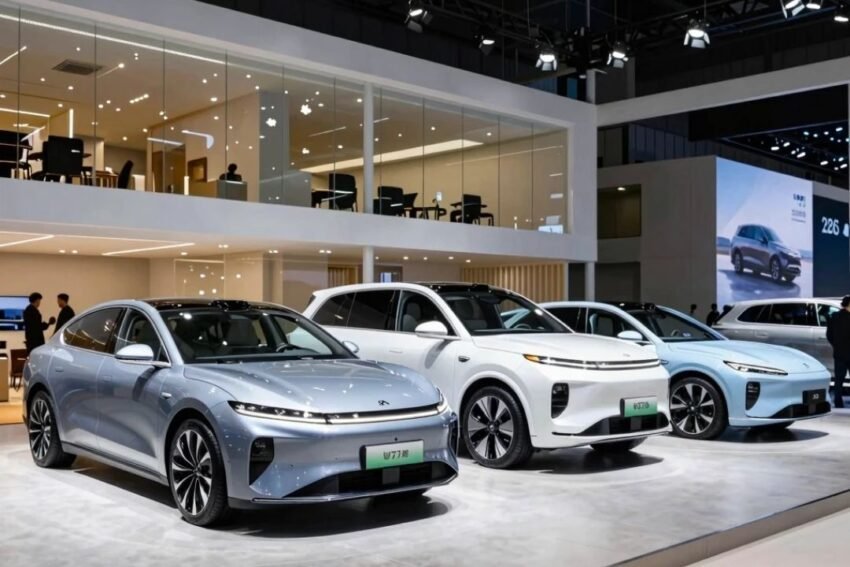
The automotive industry is entering a major period of transformation in 2026. Electric vehicles, hybrid cars, artificial intelligence, connected technology, advanced safety systems, and autonomous driving are changing how vehicles are designed, manufactured, and used.
The latest car industry news in 2026 also shows that automakers are becoming more flexible. While electric vehicles remain a major part of long-term plans, many manufacturers are expanding hybrid lineups and continuing to improve gasoline-powered vehicles in response to consumer demand.
Technology is another major factor. Modern cars increasingly include advanced software, digital dashboards, wireless connectivity, driver-assistance features, and over-the-air updates. Vehicles are becoming more like connected technology platforms while still relying on traditional mechanical engineering.
This article explores the biggest automotive industry trends in 2026, including EVs, hybrid vehicles, AI, autonomous driving, batteries, charging infrastructure, safety, cybersecurity, and the future of transportation.
1. Electric Vehicles Remain a Major Automotive Trend
Electric vehicles continue to be one of the most important areas of automotive investment.
Automakers are developing EVs across multiple segments, including:
- Sedans
- SUVs
- Pickup trucks
- Luxury vehicles
- Performance cars
- Family vehicles
- Compact cars
The expanding selection gives consumers more options for different budgets and lifestyles.
Manufacturers are focusing on improving battery range, charging speed, efficiency, software, and overall vehicle performance.
However, EV adoption is not developing at the same pace everywhere. Consumer demand, charging availability, government policies, vehicle prices, and regional preferences all influence adoption.
2. Hybrid Cars Are Making a Strong Comeback
Hybrid vehicles are receiving significant attention from automakers in 2026.
A hybrid combines an internal-combustion engine with an electric motor and battery system. This can provide improved fuel efficiency while retaining the convenience of gasoline refueling.
Hybrids can appeal to consumers who:
- Want better fuel economy
- Drive long distances
- Do not have convenient charging access
- Want to reduce fuel consumption
- Are not ready to purchase a fully electric vehicle
Major automakers are expanding hybrid offerings as they respond to changing consumer preferences.
3. Plug-In Hybrids Offer Another Option
Plug-in hybrid vehicles provide another path between traditional gasoline vehicles and fully electric cars.
They can operate on electric power for certain driving situations and use a gasoline engine when additional range is needed.
This technology can be attractive for drivers who have access to charging but frequently travel longer distances.
The popularity of plug-in hybrids will depend on pricing, incentives, charging access, and individual driving habits.
4. AI Is Transforming the Car Industry
Artificial intelligence is becoming increasingly important in automotive technology.
AI can support:
- Voice assistants
- Navigation
- Driver monitoring
- Camera analysis
- Predictive maintenance
- Personalization
- Driver-assistance systems
Future vehicles may use AI to understand driver preferences and provide more natural interactions.
However, AI systems used for driving functions require extensive testing because errors can have serious consequences.
5. Software-Defined Vehicles Are Growing
One of the biggest changes in the automotive industry is the increasing importance of software.
A software-defined vehicle can receive improvements through software updates and may offer new digital features throughout its ownership period.
Software can control or support:
- Infotainment
- Navigation
- Digital dashboards
- Driver assistance
- Charging management
- Connectivity
- Vehicle settings
This is changing the traditional relationship between automakers and customers.
6. Over-the-Air Updates Are Changing Vehicle Ownership
Many connected vehicles can receive software updates remotely.
Over-the-air updates can potentially improve:
- Navigation
- Infotainment
- Connected services
- Vehicle software
- Certain driver-assistance functions
This can reduce the need for dealership visits for some software-related issues.
However, physical repairs and mechanical maintenance still require appropriate professional service.
7. Battery Technology Remains Critical
Battery technology is central to the future of electric vehicles.
Manufacturers and battery companies are working to improve:
- Energy density
- Charging speed
- Durability
- Safety
- Manufacturing costs
- Recycling
A better battery can potentially provide greater range without requiring a significantly larger battery pack.
Reducing battery costs is also important for making EVs more affordable.
8. Faster EV Charging Is a Major Goal
Charging convenience remains one of the most important considerations for EV buyers.
Automakers and charging providers are working to improve:
- Charging speed
- Network reliability
- Station availability
- Payment systems
- Route planning
- Charging software
Faster charging can make electric vehicles more practical for long-distance journeys.
9. Charging Infrastructure Is Expanding
EV adoption depends partly on convenient access to charging.
Charging infrastructure includes:
- Home chargers
- Workplace chargers
- Public charging stations
- Highway fast chargers
- Destination chargers
Improving reliability and coverage can make EV ownership easier for drivers who cannot charge at home.
10. Electric SUVs Are Becoming More Popular
SUVs remain an important part of the global vehicle market.
As a result, manufacturers are introducing more electric SUVs.
Electric SUVs can combine:
- Passenger space
- Cargo capacity
- Modern technology
- Electric power
- Performance
The segment includes everything from compact family crossovers to large luxury SUVs.
11. Electric Pickup Trucks Continue to Develop
Electric pickup trucks remain another important automotive segment.
Manufacturers are working to improve:
- Towing capability
- Payload capacity
- Range
- Charging speed
- Durability
- Performance
Heavy loads and towing can increase energy consumption, creating additional engineering challenges for electric trucks.
12. Autonomous Driving Technology Continues to Advance
Autonomous driving remains one of the industry’s most ambitious technology goals.
Current driver-assistance systems can provide functions such as:
- Adaptive cruise control
- Lane assistance
- Automatic emergency braking
- Parking assistance
- Traffic monitoring
It is important to distinguish these systems from fully autonomous driving.
Most driver-assistance technologies still require active driver supervision.
13. Robotaxis Are Becoming More Important
Robotaxis are moving from experimental technology toward commercial deployment in selected markets.
Autonomous transportation companies are testing vehicles in controlled areas while automakers and technology companies continue developing autonomous platforms.
Hyundai has announced plans connected with Waymo’s autonomous vehicle program, with robotaxi vehicle deliveries expected to begin in late 2026.
If autonomous transportation expands, it could eventually change urban mobility and vehicle ownership.
14. Connected Cars Are Becoming Standard
Modern vehicles increasingly connect to smartphones and online services.
Connected features can include:
- Remote vehicle controls
- Digital keys
- Remote diagnostics
- Navigation updates
- Vehicle status information
- Smartphone integration
Connected services can make vehicles more convenient but also create new privacy and cybersecurity considerations.
15. Automotive Cybersecurity Is Growing in Importance
As cars become more connected, cybersecurity becomes an increasingly important part of vehicle development.
Modern vehicles may contain numerous computers, sensors, wireless connections, and online services.
Manufacturers need to protect:
- Vehicle software
- User accounts
- Connected applications
- Personal data
- Communication systems
Consumers should also use strong passwords, install legitimate software updates, and follow security recommendations.
16. Automotive Safety Technology Is Advancing
Safety remains one of the most important areas of automotive development.
Common advanced safety features include:
- Automatic emergency braking
- Lane-departure warnings
- Blind-spot monitoring
- Adaptive cruise control
- Driver monitoring
- Parking assistance
- Camera-based systems
The industry is increasingly focused on making these technologies more reliable and easier for drivers to understand.
17. Vehicle Recalls Remain an Important Issue
Recalls are a regular part of the automotive industry.
They can involve:
- Brakes
- Steering
- Airbags
- Batteries
- Software
- Electrical systems
- Doors
- Fire risks
Recalls are not limited to electric vehicles. Gasoline, hybrid, plug-in hybrid, and electric vehicles can all experience safety-related defects.
Vehicle owners should check official recall information for their specific vehicle.
18. Electronic Vehicle Features Are Being Examined More Closely
Modern cars increasingly use electronic systems for features that were once entirely mechanical.
Examples include:
- Electronic door handles
- Digital keys
- Electronic controls
- Software-managed vehicle functions
While these technologies can improve design and convenience, they must also provide reliable operation during emergencies.
Recent safety discussions around concealed electronic door handles demonstrate the importance of maintaining practical manual backup systems.
19. Chinese Automakers Are Expanding Globally
Chinese automakers are becoming increasingly influential in international markets.
Companies such as BYD and other Chinese manufacturers are expanding their electric and hybrid vehicle offerings in overseas markets.
Their growth is increasing competition for established automotive companies.
Competitive pricing, battery expertise, rapid product development, and broad model lineups are helping Chinese brands attract global attention.
20. BYD Remains a Major Global EV Player
BYD continues to receive significant attention in the global electric and hybrid vehicle market.
The company has expanded overseas exports and is developing a broader international presence.
Its growth demonstrates how competition in the automotive sector is becoming increasingly global.
21. Automakers Are Adapting Their Production Strategies
Manufacturers are adjusting their plans according to market conditions.
Factors affecting production decisions include:
- Consumer demand
- EV adoption
- Hybrid demand
- Battery costs
- Raw materials
- Trade policies
- Government regulations
- Supply chains
This is encouraging many companies to maintain flexible strategies.
22. Vehicle Affordability Remains a Concern
The price of new vehicles continues to be an important issue for consumers.
Technology, manufacturing costs, financing conditions, and supply-chain expenses can influence vehicle prices.
Affordable models are particularly important if automakers want advanced technologies to reach a wider consumer base.
23. Affordable EVs Could Accelerate Adoption
Lower-cost electric vehicles could play an important role in the next phase of EV growth.
Consumers often compare:
- Purchase price
- Range
- Charging costs
- Maintenance
- Insurance
- Financing
Manufacturers that can combine affordable pricing with good range and useful features may have an advantage.
24. Luxury Cars Are Becoming More Digital
Luxury vehicles continue to serve as showcases for new technology.
Modern premium vehicles may feature:
- Large digital displays
- Advanced audio
- AI assistants
- Digital keys
- Connected services
- Advanced driver assistance
- Personalized settings
However, usability remains important. Too many digital controls can make vehicles more complicated, so manufacturers are increasingly considering simpler interfaces.
25. Car Interiors Are Becoming Technology Hubs
Vehicle interiors are evolving rapidly.
Digital dashboards, connected infotainment systems, voice assistants, wireless charging, and smartphone integration are becoming increasingly common.
The challenge is creating technology that provides useful information without distracting the driver.
26. Vehicle Personalization Is Growing
Software allows manufacturers to offer greater personalization.
Drivers may be able to customize:
- Display settings
- Interior lighting
- Driving modes
- Climate preferences
- Seat settings
- Infotainment preferences
Future vehicles may use AI to automatically adapt settings based on individual drivers.
27. Sustainable Automotive Manufacturing Is Expanding
Environmental considerations are affecting vehicle production.
Manufacturers are exploring:
- Recycled materials
- Lower-impact manufacturing
- Battery recycling
- More efficient factories
- Renewable energy
- Sustainable materials
The goal is to reduce environmental impact across the vehicle lifecycle.
28. Battery Recycling Is Becoming More Important
As the number of EVs increases, battery recycling will become increasingly important.
Recycling can potentially recover valuable materials and reduce the need for some new raw-material extraction.
Automakers and battery companies are developing systems for collecting, processing, and reusing battery materials.
29. Automotive Supply Chains Are Changing
Global supply chains remain a major consideration for manufacturers.
Companies are increasingly evaluating where they source:
- Batteries
- Semiconductors
- Raw materials
- Electronic components
- Motors
Supply-chain diversification can help manufacturers reduce risks associated with disruptions.
30. The Future Car Will Be More Connected
The long-term direction of the automotive industry points toward vehicles that communicate with people, infrastructure, smartphones, and cloud-based systems.
Future vehicles may offer more:
- Connected services
- AI features
- Automated driving
- Predictive maintenance
- Digital personalization
- Advanced safety technology
The challenge will be making these systems secure, reliable, affordable, and easy to use.
Biggest Car Industry Trends to Watch in 2026
Several trends deserve particular attention this year.
EV Growth
Electric vehicles remain central to automotive innovation.
Hybrid Expansion
Hybrid vehicles are receiving renewed attention from major manufacturers.
AI Integration
Artificial intelligence is becoming more important in vehicle software.
Autonomous Driving
Testing and commercial autonomous services continue developing.
Battery Innovation
Better batteries can improve range, charging, cost, and performance.
Connected Vehicles
Cars are becoming increasingly connected to digital services.
Cybersecurity
Connected vehicles require stronger digital protection.
Global Competition
International automakers are competing across more markets.
What These Trends Mean for Consumers
The changing automotive industry gives consumers more choices than ever.
Before purchasing a vehicle, buyers should consider:
- Driving habits
- Budget
- Fuel or charging requirements
- Vehicle size
- Safety technology
- Maintenance
- Technology features
- Long-term ownership costs
An EV may be ideal for someone with convenient home charging, while a hybrid may better suit a driver who frequently travels long distances without reliable charging access.
There is no universal best powertrain.
How to Stay Updated With Car Industry News
Automotive news changes quickly, so consumers should monitor:
- New vehicle launches
- Manufacturer announcements
- Official recalls
- Safety developments
- EV and hybrid updates
- Battery technology
- Charging infrastructure
- Software updates
- Automotive regulations
Whenever possible, important safety and recall information should be verified through official sources.
Frequently Asked Questions
What are the biggest car industry trends in 2026?
The biggest trends include EVs, hybrid vehicles, AI, connected cars, autonomous driving, battery technology, charging infrastructure, cybersecurity, and advanced safety systems.
Are hybrid cars still relevant in 2026?
Yes. Major automakers are expanding hybrid offerings, showing that hybrids remain an important part of the automotive market.
Are electric vehicles still growing?
Yes. Automakers continue developing and launching EVs, although adoption varies by region and market conditions.
How is AI changing the automotive industry?
AI is being used in areas such as voice interfaces, navigation, driver assistance, monitoring, personalization, and predictive technologies.
What is a software-defined vehicle?
A software-defined vehicle relies heavily on software for features and functionality and can receive certain improvements through remote updates.
Are autonomous cars fully available?
Fully autonomous vehicles are not widely available for unrestricted use everywhere. Many current systems remain driver-assistance technologies requiring human supervision.
What should buyers consider when choosing an EV or hybrid?
Consider purchase price, driving range, charging access, fuel costs, maintenance, insurance, daily driving patterns, and available local infrastructure.
Conclusion
The car industry news of 2026 reflects an industry undergoing rapid technological and strategic change. Electric vehicles remain an important part of the future, but hybrid cars are also gaining significant attention as automakers respond to consumer demand.
Artificial intelligence, connected vehicles, software-defined systems, autonomous driving, advanced safety technology, and battery innovation are transforming modern cars into increasingly sophisticated machines.
At the same time, global competition is becoming stronger. Chinese automakers are expanding internationally, established manufacturers are adjusting production strategies, and consumers are gaining access to a wider selection of electric, hybrid, and traditional vehicles.
Safety and reliability remain critical. As vehicles adopt more electronic and software-based features, manufacturers must ensure that these systems remain dependable under everyday and emergency conditions.
For buyers, the changing market creates both opportunities and challenges. More technology and powertrain choices can make it easier to find a vehicle that fits individual needs, but consumers must also research charging access, ownership costs, safety features, software capabilities, and long-term reliability.
Looking ahead, the automotive industry is likely to become even more connected, intelligent, electrified, and automated. However, the most successful technologies will be those that provide genuine value while remaining safe, reliable, affordable, and easy to use.
In 2026, the future of cars is no longer defined by one technology. Instead, it is being shaped by the combination of EVs, hybrid vehicles, AI, software, batteries, connectivity, advanced safety, and global automotive innovation.